
© 2026 Crickett Keeth
If you’re considering writing a Bible study, I encourage you to use these four questions to guide you.
1. Is it doctrinally sound?
There are different opinions about some doctrines and Scriptures. It’s important as a Bible study author to make sure you’re staying doctrinally true to the Word. Read commentaries of people you trust in their study of God’s Word. Make sure you’re not leading someone down a wrong path doctrinally. When I address a difficult passage, I often present several perspectives from respected scholars, and then I ask the reader what they think and why.
2. Is the study doable timewise?
People are busy, juggling many roles. We don’t want to discourage them from diving into the Word by overwhelming them with too much material. Give them a few questions about a shorter passage each day instead of having them read three to four chapters and answer a long list of questions. If they’re overwhelmed by how much work must be done, they may walk away and say, “I’m done. I can’t do this.” State up front how long it will take to get in the Word and have time to reflect on the Scripture.
3. Does it take the reader deeper?
I’ve done studies that are very surface-level, with fill-in-the-blanks, straightforward one-word answers, or matching. As a women’s ministry director, I often hear from the women that they prefer the studies make them dig on their own. They like open-ended thought questions that lead them to ponder what a verse means. Readers want to wrestle with the Scriptures themselves rather than have the author answer the questions for them. The best studies guide them through how to study the Bible on their own.
4. Does it motivate the reader to apply the Scripture?
My seminary professor, Dr. Howard Hendricks, told us that the goal of teaching isn’t to impart information but to change lives. This advice also applies to writing Bible studies. It’s great to get into God’s Word and glean a lot of information. But if we just read, shut the book, and forget what we’ve studied, how can it change our lives? I always add a section to each day’s lesson with application questions that move the reader from taking in the information to applying it to their lives.
Using this approach, let’s write Bible studies that inspire deep thought and change lives.
_________________________

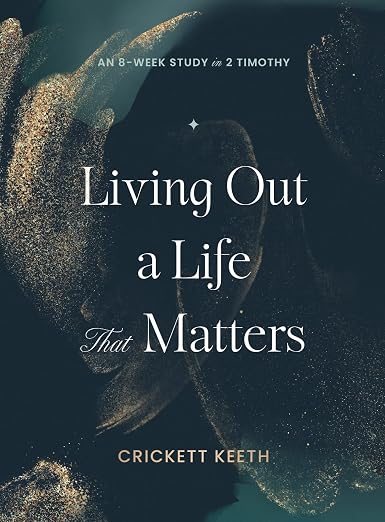 A graduate of Dallas Theological Seminary, Crickett Keeth is the author of several Moody women’s Bible studies, including her newest release, Living Out a Life That Matters. Crickett has served in ministry to women for decades on staff with Cru and large churches in Dallas and Memphis. She speaks at women’s conferences around the country and loves to come alongside women’s ministry leaders. Find encouragement in your walk with God on her website.